Factory-direct  ·  Zhengzhou, China · Manufacturing since 2012
Request a quote
Zhengzhou Haoran Machinery Equipment Co., Ltd.

Commercial drum roasters.
6 kg to 120 kg.

Built in our own factory in Zhengzhou, China. Gas and electric. Burner, gas nozzle, voltage and plug configured for your market before the machine leaves the floor.

6–120 kgBatch capacity
2 yearsWarranty
28–400kg/hour output
QingdaoFOB port
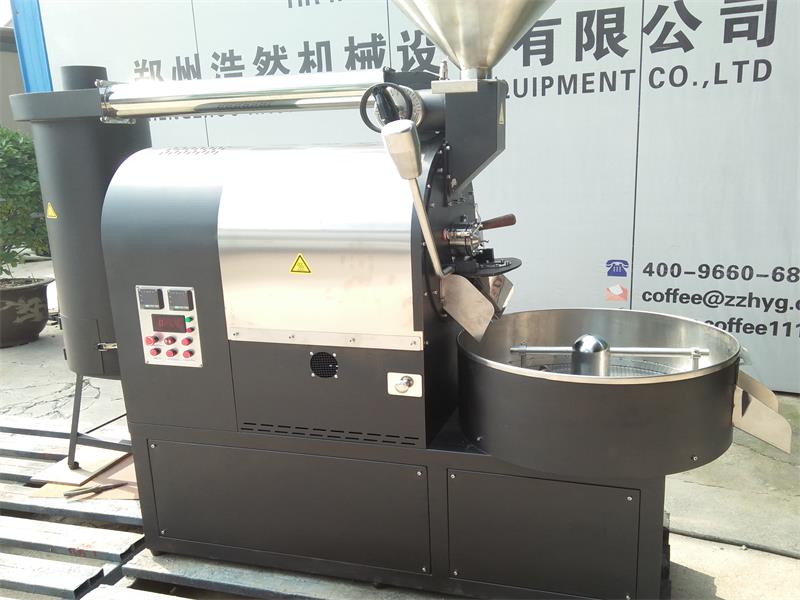
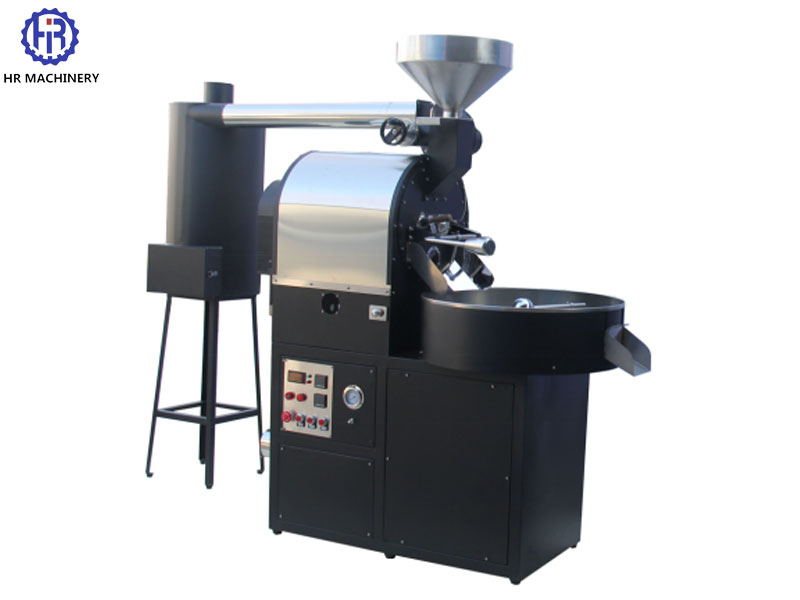
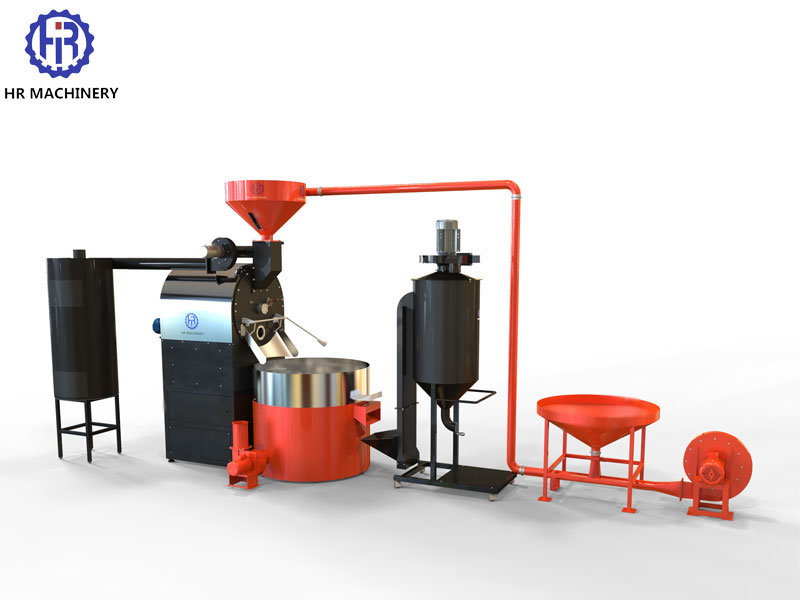
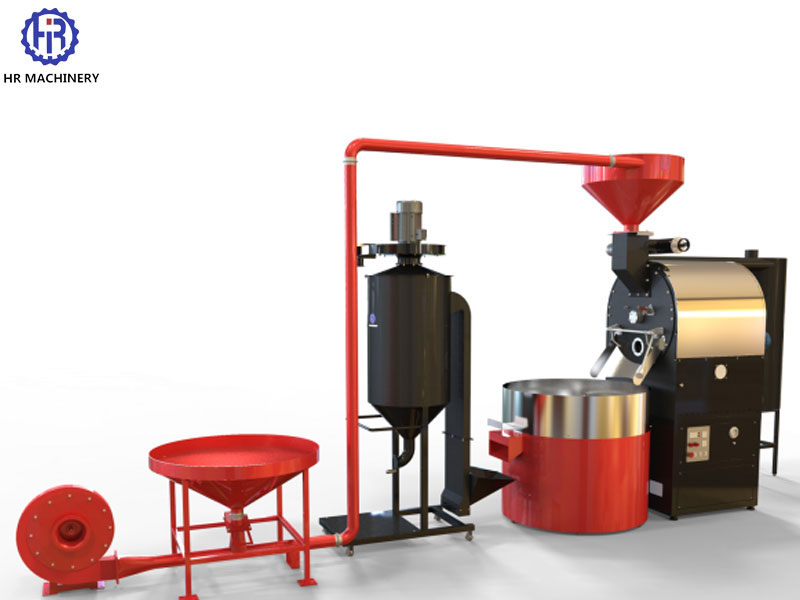
HR-120KG industrial gas drum coffee roaster with cooling tray, built by Zhengzhou Haoran
HR-120KG100–120 kg batch · ~400 kg/h
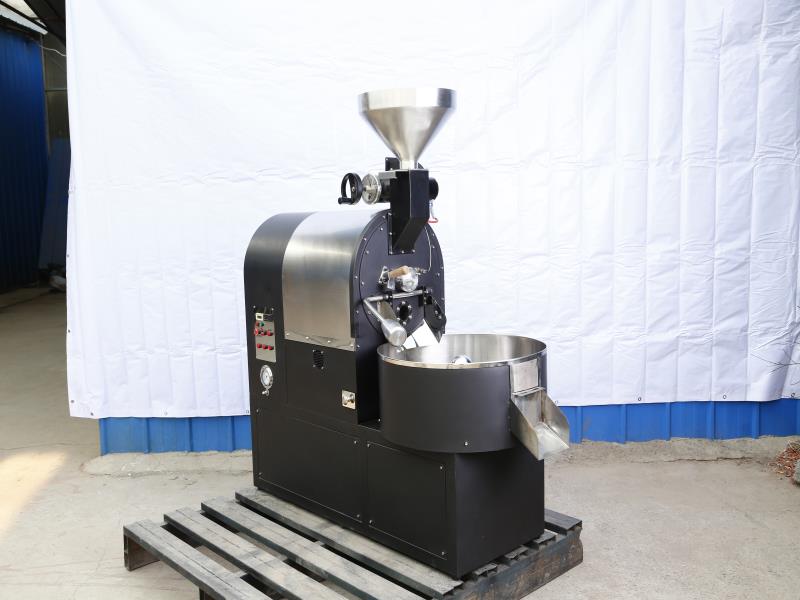
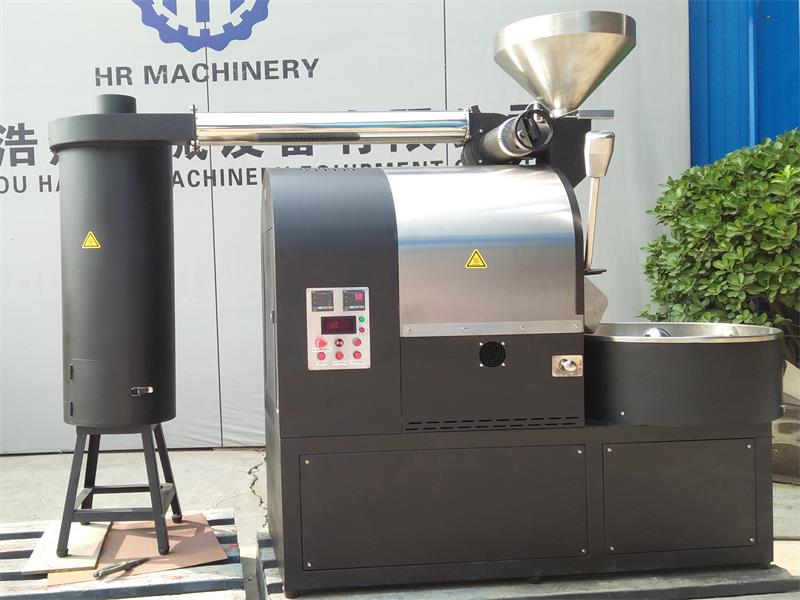
Roasting machines assembled on the factory floor Roaster crated on a pallet for export Cyclone separator and roaster body in the workshop
The range

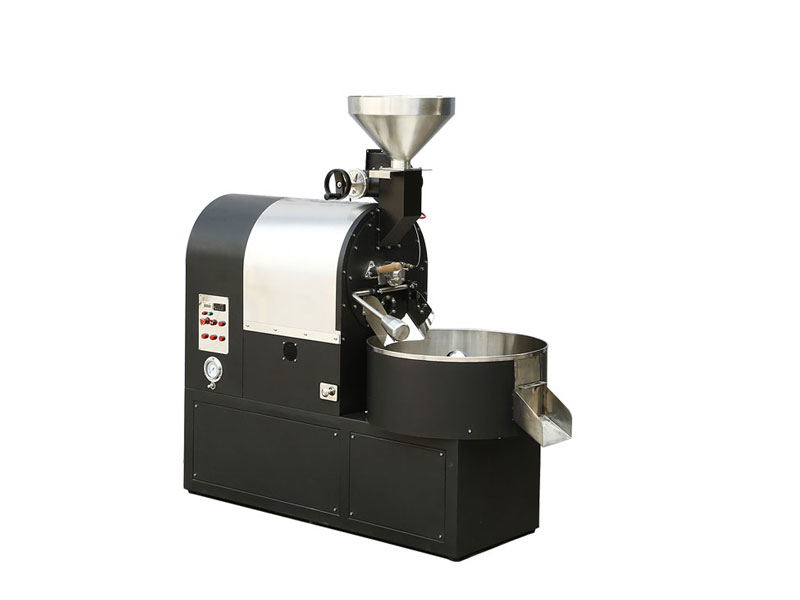
Seven drum sizes, 6 kg to 120 kg

Same drum-and-airflow architecture, scaled up. 6, 12 and 15 kg are also available with electric heating — everything above that is gas only, because the element load stops making sense.

Technical data

The numbers, straight from our drawing sheet

Eighteen rows per model: batch range, output, gas consumption, every motor, packing size and gross weight. Scroll the table sideways on a phone. Nothing here is estimated.

ItemHR-6KGHR-12KGHR-15KGHR-20KGHR-30KGHR-60KGHR-120KG
Batch capacity1–7 kg7–13 kg9–16 kg15–22 kg25–33 kg50–60 kg100–120 kg
Output (roasted)~28 kg/h~48 kg/h~60 kg/h~88 kg/h~135 kg/h~240 kg/h~400 kg/h
Roast time per batch10–12 min10–12 min10–12 min12–15 min12–15 min13–18 min13–18 min
Temperature range0–400 °C0–400 °C0–400 °C0–400 °C0–400 °C0–400 °C0–400 °C
Drum304 double-wall304 double-wall304 double-wall304 double-wall304 double-wall304 double-wall304 double-wall
Heating methodHalf direct + hot airHalf direct + hot airHalf direct + hot airHalf direct + hot airHalf direct + hot airHalf direct + hot airHalf direct + hot air
Cooling time1–2 min1–2 min1–2 min1–2 min2–5 min3–5 min3–5 min
LPG consumption0.65 m³/h1.32 m³/h1.32 m³/h1.5–2.1 m³/h2.0–3.5 m³/h3.3–4.2 m³/h6.1–7.9 m³/h
Natural gas consumption1.85 m³/h3.95 m³/h3.95 m³/h2.8–4.6 m³/h4.2–6.8 m³/h8.2–11.6 m³/h15.3–20 m³/h
Drum motor320 W420 W420 W1,100 W1,100 W2,800 W5,200 W
Cooling tray fan670 W1,580 W1,580 W2,200 W2,200 W4,500 W7,100 W
Hot air fan350 W800 W800 W800 W800 W2,200 W2,800 W
Cooling mixer120 W120 W120 W400 W400 W400 W1,200 W
Feeding motor————4,200 W4,200 W7,180 W
Gas-type total power1,460 W2,920 W2,920 W4,500 W8,700 W14 kW23 kW
Electric total power15.8 kW33 kW36 kW————
Packing size (cm)152×110×209197×129×204197×129×204250×160×210170×117×216 +
200×138×186
On requestOn request
Gross weight397 kg670 kg690 kg850 kg~1,720 kgOn requestOn request

Output is the manufacturer's continuous figure; in practice cooling, loading and cleaning cut it to roughly 60–70%. Packing size and gross weight for 60 kg and 120 kg are still being updated by the factory — we quote them with the offer. Binding figures are those in the technical annex of the contract.

Sizing

Most buyers order one size too big

The machine you need is set by how much you can sell — not by its nameplate maximum. Run your own numbers.

Monthly roasted output
—
Green / day—
Roasted / day—
Roasted / year—

Rule of thumb: 85% yield

Green to roasted loses about 15% of weight. A 10 kg batch yields roughly 8.5 kg of roasted coffee — the figure your customers are actually buying.

Then cut it by 25%

Cleaning between origins, cooling time and demand swings all eat throughput. Plan for 70–75% of the nameplate number, especially in your first year.

Match the machine to sales, not to ambition

An oversized drum runs half-full batches, which means poor temperature stability and inconsistent roast. If you are between two sizes, take the smaller one and add a second machine later.

Inside the machine

Where the money actually goes

Drum, burner, airflow, cooling. These four decide whether a roaster repeats yesterday's profile — or drifts.

Perforated stainless roasting drum with stirring vanes

Perforated stainless drum, half-vane hot-air control

  • Laser-cut, welded drum — precision-cut perforations give an even convective flow through the bean mass, not just off the drum wall.
  • Half-vane hot-air regulator — dial the split between conductive heat from the drum and convective heat from the airflow. That is the difference between a flat profile and a controllable one.
  • Direct fire plus hot air — keeps the aroma compounds that pure hot-air machines tend to strip out.
  • Pressure adjustment to 0.1 kPa — the drum runs slightly negative so smoke leaves through the exhaust, not the door seal.
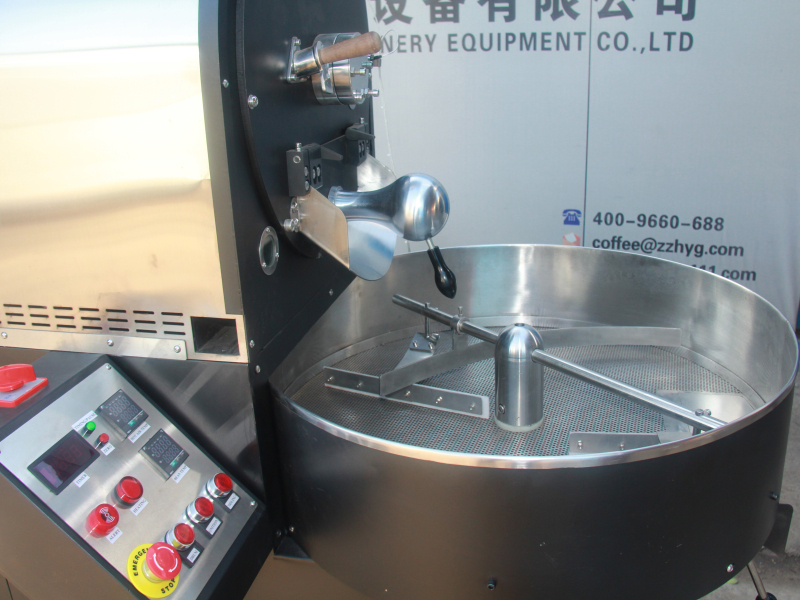
Roaster control panel with digital temperature display, gauges and switches

FUJI PID control with curve output

  • FUJI PID digital controller — industrial-grade, not a hobby thermostat. Bean and environment temperature read separately.
  • Curve output software — the controller exports a roast curve you can log, compare and repeat.
  • 45° refractory glass window — watch colour development directly, with a sampling spoon to pull triers without dropping batch temperature.
  • Independent chaff collector — silver skin leaves the drum continuously, so it does not scorch and flavour the next batch.
Circular stainless cooling tray with stirring arms and drive motor

Suction cooling, sized to the batch

  • Full-width cooling tray with rotating arms, driven independently of the drum.
  • Suction fan pulls air through the bean bed, not just across the surface — the batch drops toward ambient in minutes, which is where flavour is locked in or lost.
  • Proportional to drum size — the tray on a 30 kg machine is not the 3 kg tray scaled up.
  • Cooling time is your real cycle limit — plan batch intervals around it, not around roast time alone.
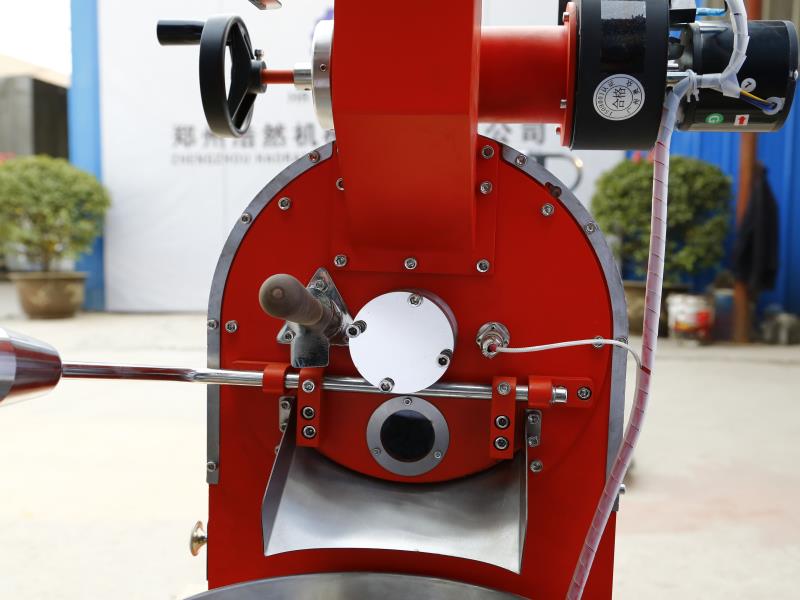
Electrical control cabinet with motor, fan and wiring

Built for service, not for the showroom

  • Accessible control cabinet — motors, contactors and wiring reachable without dismantling the machine.
  • Heat-resistant wiring through the hot section.
  • Consumables ship with the unit — probes, seals and gaskets, so a wear part does not stop production for a month.
  • 2-year machine warranty on core components.
The factory

Not a trading company

Zhengzhou Haoran Machinery Equipment has been building roasting equipment in Henan since 2012. Machines are assembled, wired, fired up and tested here before they are crated.

Gas roasting machines assembled in the factory
Assembly floor
Cyclone separator and roaster body in the workshop
Cyclone & body
Roaster on a wooden pallet ready for export crating
Pre-shipment
Large stainless cooling tray and discharge chute
Large-format build
2012Manufacturing in Zhengzhou, Henan
6–120 kgNine models, gas and electric
28–400 kg/hOutput range, middle to dark roast
Beyond coffee

The same drum roasts more than beans

A perforated drum with independent airflow is a general-purpose roaster. Buyers in several markets run these on tea, cocoa and nuts — ask before you assume it cannot.

01

Green coffee

The core application. Single-origin and blend roasting, 10–20 minute profiles, middle to dark.

02

Tea finishing

Oolong and dark tea aroma development — low temperature, high airflow passes rather than a coffee profile.

03

Cocoa & nuts

Cocoa bean roasting for craft chocolate, plus sesame, peanut and tree-nut roasting at commercial volume.

Getting it to you

Export packing and documentation

Machines ship from Qingdao or Shanghai. We prepare the loading plan before you book freight, so your forwarder is not guessing.

01

Crated for sea freight

Wooden crate with internal bracing. Net weight and crate dimensions given per model so you can price LCL or FCL accurately.

02

Configured at the factory

Voltage, plug, gas type and nozzle are set before packing. Changing them after arrival is expensive — tell us at quoting stage.

03

Documents

Commercial invoice, packing list, certificate of origin. Tell us what your customs broker needs and we match it.

04

Commissioning

English manual and a video walkthrough: burner setup, first roast, cooling cycle, daily cleaning. Remote support through your first week.

05

Spare parts kit

Probes, seals, gaskets and a motor coupling can ship inside the crate. Ask for a two-year consumables list.

06

Container planning

We will tell you honestly whether your order fills a 20GP, needs a 40HQ, or is better as LCL. Sending one machine FCL is usually a waste of your money.

Read this before you order

Three things that decide whether a gas roaster works for you

We would rather lose the order now than have you discover this when the container arrives.

1 · Gas supply

  1. Every HR gas model is LPG or natural gas fired — there is no dual-fuel option.
  2. LPG and NG need different nozzles. We size them for your gas; you must tell us which you have.
  3. Liquid gas needs a regulator and adequate cylinder or tank supply on site.

2 · Ventilation

  1. You need a roof or wall exhaust path sized to the machine's airflow.
  2. Many municipalities require an afterburner or filtration on roasting exhaust. Check before you buy.
  3. Indoor installations need make-up air, or the burner starves and the profile drifts.

3 · Certification

  1. Ask us for the current certification status for your country before you commit. We will tell you plainly what we hold and what we do not.
  2. The EU and North America have specific requirements that differ from most of Asia, Africa and Latin America.
  3. Do not assume a CE mark on a competitor's brochure applies to this machine.
Questions buyers ask

Straight answers

What is the minimum order quantity?
One machine. We are a factory, not a wholesaler with a container minimum — but freight economics favour putting two or three units in one shipment, so ask for a combined quote.
How long from order to shipment?
Depends on the model and on configuring your gas and voltage. Ask for a written lead time against your specific model when you request the quote — we will not publish a number here that may not hold in your season.
Can you change the voltage and the gas nozzle for my country?
Yes, and it must be done at the factory. Tell us your country, supply voltage and whether you run LPG or natural gas. A machine built for 380 V three-phase will not run on 220 V single-phase without changes.
Do you have CE / UL?
Ask us directly for the current status for your destination and we will answer in writing. We would rather tell you we do not hold a certificate than have you find out at customs. For markets that require CE or UL, confirm before you pay a deposit.
How many machines fit in a container?
It depends on the model — a 120 kg machine is 455×415×340 cm net and will not share a 20GP with anything else. Send us your model mix and we will return a loading plan with crate dimensions and weights for your forwarder.
What happens if something breaks?
Core components carry a 2-year warranty. Wear parts — probes, seals, gaskets — ship as a kit with the machine. For remote diagnosis we work from video and photographs; if a part fails under warranty we ship the replacement and you fit it with guidance.
Can I see one running before I buy?
If you can visit Zhengzhou, yes — come to the factory and we will roast a batch with you. If you cannot travel, tell us which model you are considering and we will send current video of that model running, not a stock clip.
Next step

Three details and we can quote

Most quotes that go nowhere are missing the same three things. Give us these and the first answer is actually useful.

  • 1Your country and city — decides voltage, plug and gas configuration
  • 2Kilos of roasted coffee you need per day — decides the model
  • 3LPG or natural gas — decides the burner nozzle

Email hr_roaster@163.com

WhatsApp QR code for HR-Roaster
Scan to chat Message us on WhatsApp Open WhatsApp and point the camera at the code — it opens our chat directly. Works from any country, nothing to type. On desktop? Tap here → Chat on WhatsApp

What happens nextWe come back with a model recommendation and an FOB price — not a catalogue dump. If you can reach Henan, we will roast a batch with you before you commit.

This opens your mail app with everything filled in — nothing is stored on this site. Faster? Tap the green WhatsApp button.
WhatsApp
×